


I hear this question often in my office: “If I can’t see the way I used to, how am I supposed to keep working?” It’s one of the most common worries I hear from people living with macular degeneration, glaucoma, diabetic retinopathy, Stargardt disease, retinitis pigmentosa, and other causes of vision loss. The good news is that losing some vision does not mean losing your career. With the right glasses and devices, plus excellent state resources, many of my patients in Washington and Oregon keep doing the work they love.
Vision Loss Doesn’t Have to Mean the End of Your Career
When someone comes to me worried about their job, I start the same way I always do: by listening. What does their work actually require? Reading a screen? Reviewing documents? Driving to job sites? Recognizing coworkers across a room? Every job is different, and so is every pair of glasses or low vision device I prescribe. There is no one-size-fits-all solution, only the right fit for what someone needs to keep doing.
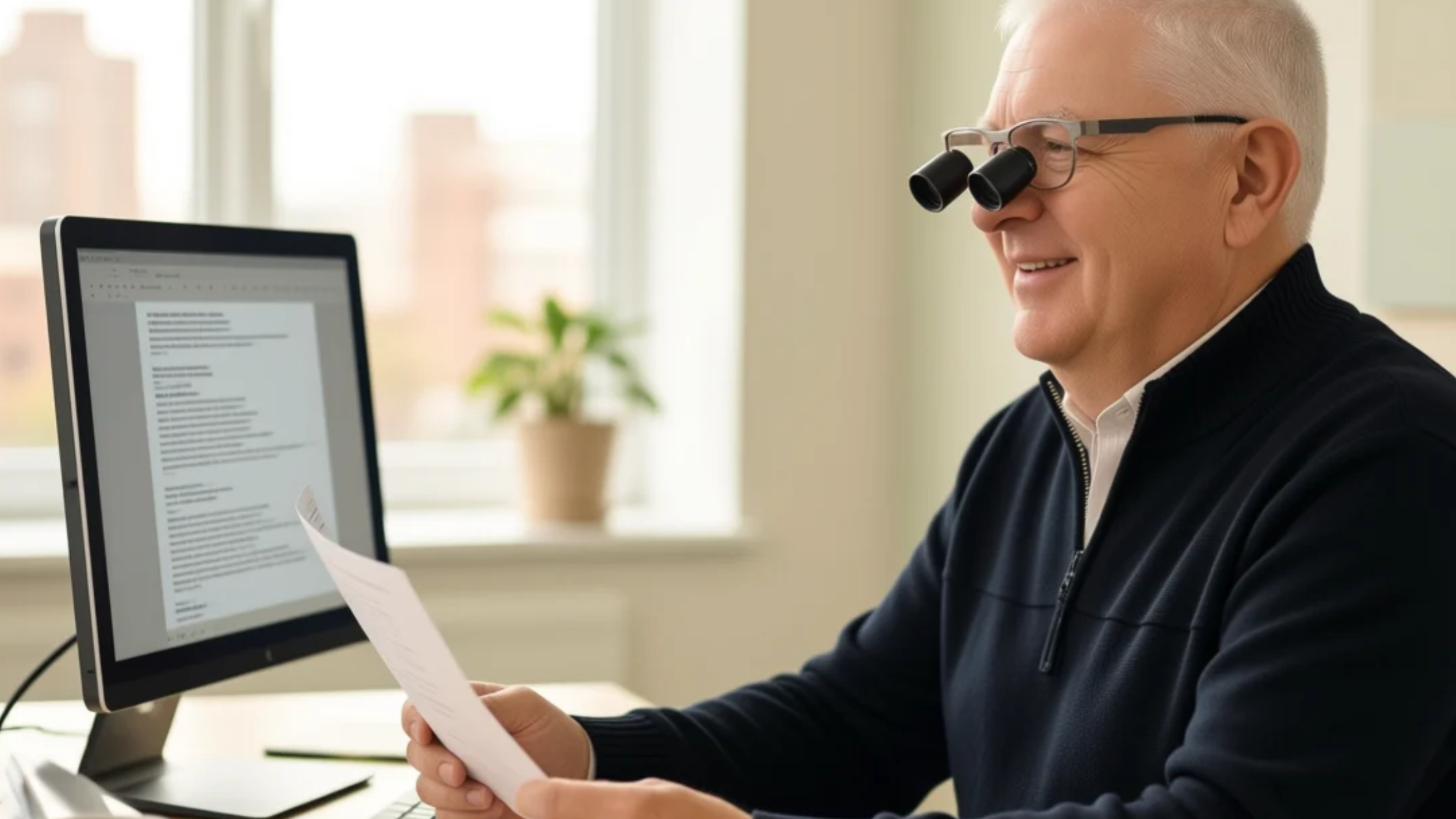
For many of my patients, the right pair of glasses, whether that’s bioptic telescope glasses for distance tasks or prismatic reading glasses for paperwork, makes a real difference in staying productive and confident at work.
Washington: Department of Services for the Blind
If you live in Washington and vision loss is making it harder to do your job, the state’s Department of Services for the Blind (DSB) is a resource worth knowing about. DSB works with people who are blind, deaf-blind, or living with low vision to help them get and keep employment. Their Vocational Rehabilitation program can help with assistive technology, job training, and career counseling, built around each person’s employment goals.
You can learn more at www.dsb.wa.gov.
Oregon: Commission for the Blind
For folks across the border in Oregon, the Oregon Commission for the Blind (OCB) offers a similar path forward. Their Vocational Rehabilitation program provides free, statewide job-readiness help for Oregonians experiencing vision loss, so people can keep working in the field they’ve trained for or find a new direction that fits their changing vision.
You can reach OCB at 888-202-5463 or 971-673-1588.
Your Eye Doctor and I Work Together
I want to be clear about something. I’m not here to replace your regular eye doctor. Your optometrist or ophthalmologist manages your overall eye health, and that relationship matters. My role at Seattle Low Vision is different. I focus specifically on helping you make the most of the vision you have, through specialized glasses, devices, and strategies tailored to your goals, including staying at work. If you need routine eye care, my home practice, Optical Images, is always here to help as well.
Let’s Talk About What You Need to Keep Working
No two people’s vision, or jobs, are exactly alike. That’s why I start every relationship with a conversation, not a prescription pad. If vision changes are making your work harder, I’d like to hear about it and talk through what might help.
Call Seattle Low Vision today at (425) 823-2020 for a free low vision phone consultation. Let’s talk about what’s getting in the way, and what we can do about it.