


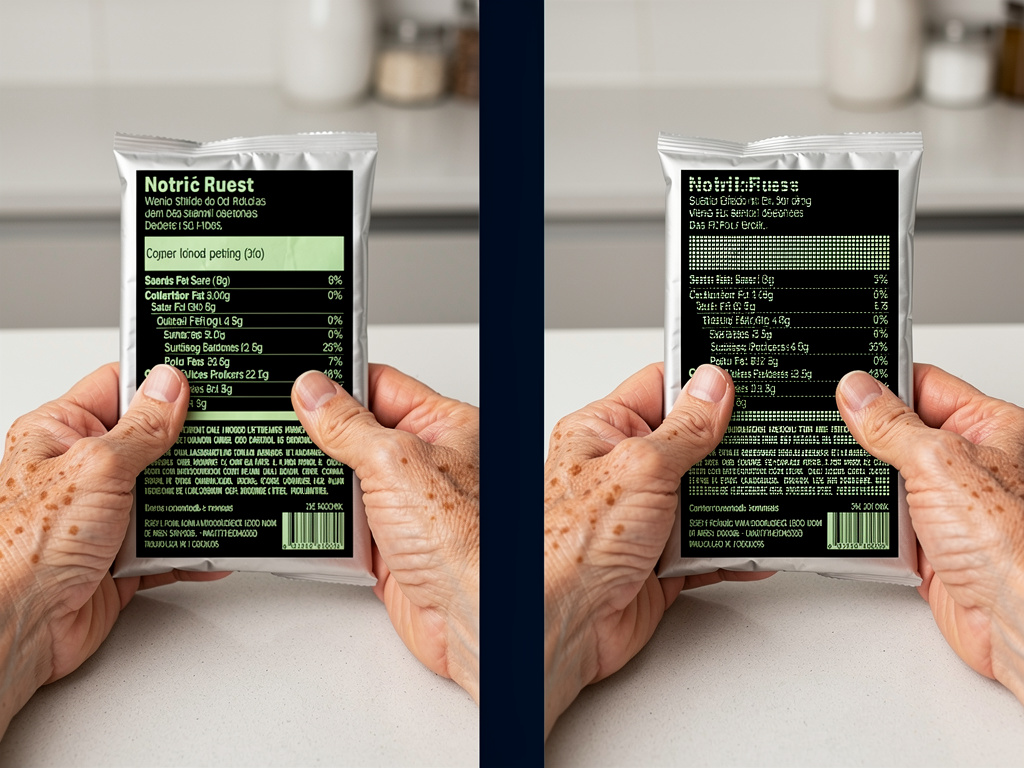
Note: The image is an illustrative concept only. Individual visual experiences with PRIMA may differ.
By Ross A. Cusic, O.D., F.I.A.L.V.S.
Seattle Low Vision | Kirkland, Washington
An emerging retinal implant has drawn attention for its potential to help some people with advanced dry age-related macular degeneration. Here is what PRIMA does, what it may feel like to use, and what people in the United States should know today.
What is PRIMA?
When I meet someone with advanced dry age-related macular degeneration (AMD), especially dense geographic atrophy at the center of the retina, I know how much central vision loss can affect everyday life. Reading a label, recognizing a face, or following a favorite recipe may become difficult. People often want to know whether new technology might offer another option.
PRIMA is an investigational United States-based vision system that combines a tiny implant placed beneath the retina with specialized glasses. The glasses project near-infrared light onto the implant. The implant converts that light into electrical signals that stimulate surviving retinal cells. In simple terms, the system provides an artificial central point of vision while a person continues to use their natural peripheral vision.
This approach differs from magnification alone. Magnifiers, specialized glasses, and electronic tools enlarge or adjust images so people can make better use of their remaining sight. PRIMA is designed to create a new visual signal in an area affected by geographic atrophy. It is a striking development, but it is not a simple replacement for low vision care or a solution for everyone.
What might the visual experience be like?
It is important to set realistic expectations. Based on the system’s reported visual experience, the image may appear monochromatic and pixelated, more like phosphor-like dots than natural, full-color sight. It is not the same as seeing a smooth, detailed image with an unaffected retina.
The implant provides an artificial central field, while natural peripheral vision remains important for awareness of the surrounding space. A person would need to learn how to shift between that natural peripheral view and the implant’s central visual signal. Adapting takes practice, and people may vary in how effectively they can use the system. Not everyone will be a candidate, and not everyone who receives it will adapt in the same way.
What has research shown so far?
A clinical study of the PRIMA system was reported in the New England Journal of Medicine. Science Corporation’s July 2026 announcement summarized results from 38 participants across 17 sites in five countries. The company reported that participants, on average, gained 25.5 letters on an eye chart, and that 84% reported being able to read letters, numbers, and words with the system. Those findings are encouraging, but they reflect group results, not what any one person will experience. Surgery, selection criteria, training, and individual health all matter.
Is PRIMA available in the United States?
As of October 2026, PRIMA is not approved or commercially available in the United States. Science Corporation has announced a European commercial launch and says it is working with the U.S. Food and Drug Administration. A Humanitarian Use Device designation or FDA Breakthrough Device designation is not the same as FDA approval. People should be cautious about claims that suggest the implant is currently available here or that anyone with AMD can receive it.
What can I do while I wait for new options?
I don’t believe people should have to put their lives on hold while they wait for new technology. Low vision care starts with listening to what matters to you. Depending on your eye condition, remaining vision, and goals, options may include specially prescribed glasses, magnification, electronic tools, or practical strategies for reading, cooking, managing medication, and enjoying time with family. These approaches do not cure AMD, but they may help you make better use of the vision you have.
I work collaboratively with a person’s regular optometrist and ophthalmologist. Low vision care is specialized support that complements ongoing eye care, not a replacement for it. If you are in Seattle, Kirkland, elsewhere in Washington, or beyond, I would be glad to hear what you are hoping to do more comfortably.
If you have advanced dry AMD or geographic atrophy and would like to talk about current low vision options, call Seattle Low Vision at (425) 823-2020 for a free low vision phone consultation with me, Dr. Ross Cusic. We can discuss your goals and whether a low vision evaluation may be helpful. You should also discuss questions about retinal surgery or PRIMA candidacy with your retinal specialist.