


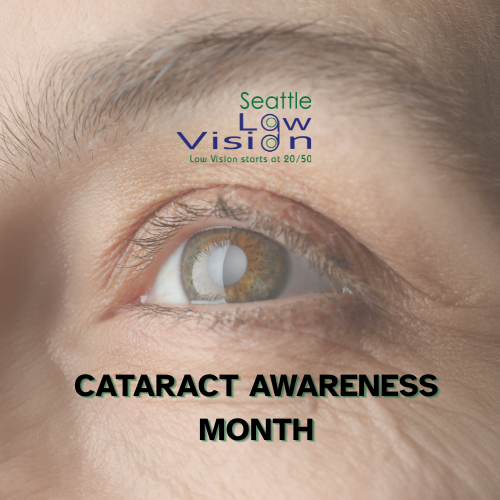
June is Cataract Awareness Month, a time dedicated to educating folks about one of the most common causes of vision changes as we age. As a low vision doctor serving Seattle and the Pacific Northwest, I often meet people who are experiencing vision difficulties and are unsure whether cataracts are the cause—or what options may be available to help them continue living independently.
While cataracts is common, it should never be ignored. Understanding the signs, treatment options, and the connection between cataracts and low vision can help you make informed decisions about your eye health.
What Is Cataracts?
A cataract occurs when the natural lens inside the eye becomes cloudy. In a healthy eye, the lens is clear and helps focus light onto the retina. Over time, proteins in the lens can break down and clump together, creating cloudy areas that interfere with vision.
Cataracts typically develop gradually, which means many people may not notice the changes right away. However, as cataracts progress, everyday activities can become more challenging.
Common Symptoms of Cataracts
Cataracts can affect each person differently, but some of the most common symptoms include:
- Blurry or cloudy vision
- Increased sensitivity to light and glare
- Difficulty seeing at night
- Colors appearing faded or yellowed
- Frequent changes in eyeglass prescriptions
- Double vision in one eye
- Trouble reading or recognizing faces
If you’re noticing any of these symptoms, it’s important to schedule a comprehensive eye examination to determine the cause of your vision changes.
Can Cataracts Cause Vision Loss?
Yes. Left untreated, cataracts can lead to significant vision loss. As the clouding becomes more severe, it can interfere with reading, driving, watching television, and performing daily tasks.
The good news is that cataract surgery is one of the most common and successful procedures performed today. During surgery, the cloudy lens is removed and replaced with a clear artificial lens, often restoring much of a person’s vision.
However, cataracts are not always the only factor affecting eyesight.
When Vision Problems Continue After Cataract Surgery
Many people expect perfect vision after cataract surgery. While surgery can dramatically improve vision for many patients, some continue to experience vision challenges due to other eye conditions.
I frequently work with folks who have underlying conditions such as:
- Macular degeneration
- Diabetic retinopathy
- Glaucoma
- Retinal diseases
- Optic nerve disorders
In these situations, cataract surgery may improve clarity, but it may not fully restore vision because the underlying eye disease remains.
This is where low vision care can make a meaningful difference.
Understanding Low Vision
Low vision is a permanent vision impairment that cannot be fully corrected with standard glasses, contact lenses, medication, or surgery.
People with low vision often struggle with activities such as:
- Reading books, newspapers, or medication labels
- Recognizing faces
- Watching television
- Managing finances
- Using computers and smartphones
- Driving safely
Low vision does not mean blindness. In fact, many people with low vision still have usable sight and can benefit from specialized strategies, training, and devices designed to maximize their remaining vision.
Seattle WA Low Vision Care: Finding Solutions Beyond Standard Eye Exams
At Seattle Low Vision, my goal is to help people make the most of the vision they have.
A low vision evaluation is different from a routine eye exam. During the evaluation, I assess how your vision impacts daily life and identify tools and technologies that may help improve your ability to perform important tasks.
Depending on your needs, recommendations may include:
- High-powered reading devices
- Specialized magnification systems
- Electronic magnifiers
- Enhanced lighting solutions
- Distance viewing devices
- Adaptive technology for computers and smartphones
Many people are surprised to discover that there are solutions available even when they have been told nothing more can be done for their vision.
Cataract Awareness Month Is a Reminder to Protect Your Vision
Cataract Awareness Month is an excellent opportunity to prioritize your eye health. Regular eye examinations can help detect cataracts early and identify other eye diseases that may contribute to vision loss.
If you’ve been diagnosed with cataracts, are experiencing vision changes, or continue to struggle with vision after cataract surgery, it may be time to explore whether low vision care could help.
Every person’s vision journey is unique, and there may be options available to improve your independence, confidence, and quality of life.
Schedule a Low Vision Consultation
If vision loss is making everyday activities more difficult, you don’t have to navigate those challenges alone.
At Seattle Low Vision, I work with people throughout Seattle, Washington, and the Pacific Northwest to identify practical solutions that help them continue doing the things they enjoy most.
Contact Seattle Low Vision today to schedule a consultation and learn how specialized low vision care may help you maximize your remaining sight and maintain your independence.
Dr. Ross Cusic
Seattle Low Vision