


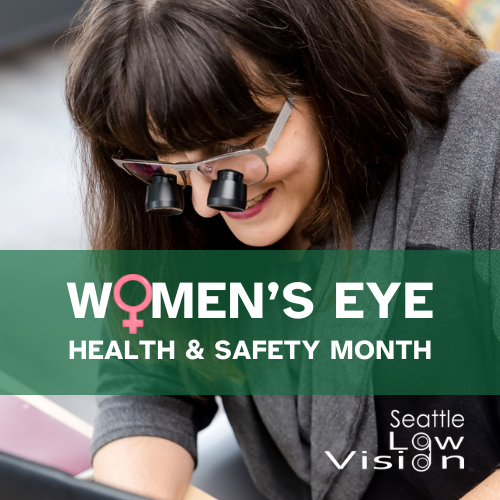
Every April, Women’s Eye Health and Safety Month serves as an important reminder to prioritize your vision. Led by Prevent Blindness, this initiative highlights a key reality: women make up the majority of individuals living with vision impairment.
At Seattle Low Vision, we believe that understanding your unique risk factors is the first step toward protecting your eyesight and maintaining your independence.
Why Women Face a Higher Risk of Vision Problems
Research shows that nearly two out of every three people with vision loss are women. There are several reasons for this, and many are tied to natural life changes and overall health.
Hormonal Changes Throughout Life
Hormonal shifts during pregnancy and menopause can affect your eyes in noticeable ways. Some women experience dry eye, blurred vision, or increased sensitivity. While these changes can be temporary, they can also become long-term concerns without proper care.
Higher Rates of Autoimmune Conditions
Conditions like lupus and Sjögren’s syndrome are more common in women and can directly impact eye health. These diseases may lead to chronic dryness, inflammation, and even damage to important eye structures if not managed properly.
Longer Life Expectancy
Women tend to live longer, which naturally increases the risk of age-related eye conditions such as cataracts, glaucoma, and macular degeneration. These conditions often develop gradually, making regular monitoring essential.
Putting Others First
Many women are caregivers, often prioritizing the needs of their families over their own health. Unfortunately, this can lead to delayed eye exams and missed opportunities for early detection.
How You Can Protect Your Vision
The good news is that many eye conditions can be managed or slowed when detected early. Taking a proactive approach to your eye health can make a meaningful difference.
Schedule Regular Comprehensive Eye Exams
A comprehensive dilated eye exam allows your eye doctor to detect signs of disease before symptoms begin. Early detection is one of the most effective ways to protect your vision.
Understand Your Family History
If conditions like glaucoma or macular degeneration run in your family, your risk may be higher. Sharing this information with your eye doctor helps guide more personalized care.
Wear UV-Protective Sunglasses
Protecting your eyes from ultraviolet (UV) rays can reduce your risk of cataracts and other damage. Look for sunglasses that block 100% of UVA and UVB rays.
Maintain a Healthy Lifestyle
Simple habits can support long-term eye health:
- Eat a balanced diet rich in leafy greens and omega-3 fatty acids
- Add an AREDS II eye vitamin supplement, such as PreserVision or Ocuvite. We also recommend and prescribe TOZAL for those with dry macular degeneration, dry eye syndrome, and meibomian gland dysfunction. .
- Stay physically active
- Avoid smoking
These choices not only benefit your overall health but also help protect your vision.
Use Protective Eyewear When Needed
Whether you’re working on a home project or playing sports, protective eyewear can help prevent injuries that could lead to permanent vision damage.
Supporting Your Vision at Every Stage
Your vision plays a vital role in how you experience daily life. Taking time to care for your eyes is not just about prevention—it’s about preserving your quality of life.
During Women’s Eye Health and Safety Month, we encourage you to make your eye health a priority. If it’s been a while since your last exam, this is a great time to schedule one.
At Seattle Low Vision, Dr. Ross Cusic and our team are here to support you with personalized care and guidance tailored to your needs.
Explore expert guidance, customized eyewear solutions, and compassionate care at —a trusted resource to help you see more clearly and confidently in daily life.
Contact Optical Images 425-654-2704 or visit the website opticalimages.com for more info.